Nederlands
 Deutsch
 English
 Español
 Français
 Italiano
 Português
 Svenska

Spain's world championship victory belonged to Coello and Lebrón in the spotlight, but the data tells a different story about who truly dominated the final.
The Numbers Behind Spain's World Cup Victory
Spain claimed the FIP World Cup title, and while Juan Lebron and Paquito Navarro naturally drew the headlines, advanced analytics reveal a more nuanced picture of the final's standout performer. According to Padel Intelligence data, Coki Nieto emerged as a statistical marvel, committing just 5 unforced errors throughout the match while assuming only 6% of his partnership's total play. This exceptional efficiency raises important questions about how we evaluate MVP performances in padel's biggest moments.
Nieto's defensive solidity and minimal errors suggest a player operating at peak precision when it mattered most. In championship padel, consistency at the net and error reduction often prove more valuable than flashy offensive displays. His ability to stay composed and execute fundamentals while his partner controlled the tempo exemplifies the team-oriented nature of doubles padel at the elite level.
Augsburger and Goñi: Winners and Mistakes Tell Divergent Stories
The final also highlighted an intriguing contrast between two players who posted identical offensive statistics. Leandro Augsburger and Gonzalo Goñi both struck 31 winners, yet their overall impact differed significantly due to error management. A 13-error differential between players with equal offensive output illustrates how unforced mistakes can determine championship outcomes. This disparity underscores that winning padel isn't simply about hitting more winners—it's about minimizing the self-inflicted wounds that hand momentum to opponents.
In World Cup finals, where pressure intensifies with every point, the player who maintains composure and reduces errors often influences the scoreline more than the one chasing spectacular shots. Goñi's superior error control despite matching Augsburger's winner count suggests a more complete performance under championship pressure.
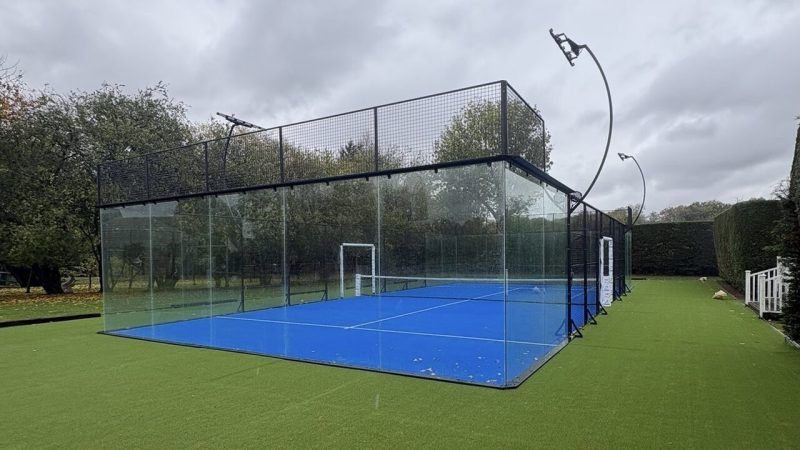 Spain Celebrates Historic World Padel Championship Victory in Doha
Redefining MVP in Modern Padel Analysis
The debate surrounding the men's final MVP reflects evolving perspectives on padel excellence. Traditional narratives favor the player making the most impact plays, yet Padel Intelligence data demonstrates that defensive reliability and error minimization deserve equal recognition. Coki Nieto's performance exemplifies this shift—a player who didn't need to dominate possession or hit the most winners, but whose precision and discipline provided the foundation for Spain's triumph.
As padel analytics become increasingly sophisticated, the sport's community must consider whether MVP recognition should reward aggressive dominance or the quiet excellence of mistake-free, high-percentage padel. Both approaches have merit, but championship-level padel increasingly suggests that the latter—controlled, efficient, error-conscious play—often determines who lifts the trophy.